
Are you planning a kitchen makeover but worried about how much cabinet painting will actually cost? Understanding the cost to paint kitchen cabinets helps you make smart decisions about your renovation budget.
Cabinet painting offers an affordable way to change your kitchen without replacing everything completely. Your expenses depend on cabinet size, paint quality, labor rates, and whether you tackle it yourself.
Kitchen renovations can drain your wallet fast if you don’t plan expenses carefully beforehand. Knowing what affects pricing lets you avoid unexpected bills that strain your finances during the project.
I’ll break down everything so you can budget realistically for beautiful results. Get ready to make your kitchen shine without breaking the bank.
This information is for educational purposes only. All costs mentioned are estimates and may vary based on location and project specifics.
What Makes Up Kitchen Cabinet Painting Expenses?
Painting kitchen cabinets involves multiple expense categories that add up to your total project cost. Knowing what makes up the final bill helps you plan your budget more accurately.
Labor represents the largest portion of your spending when you hire professional painters for the work. This covers all the hours spent preparing surfaces, applying coats, and waiting for proper drying time.
Materials form another major cost category that includes paint, primer, supplies, and protective equipment needed. Quality products in this category directly affect how your finished cabinets look and hold up.
Additional expenses can include hardware handling, special finishes, and any repairs needed before painting begins.
Factors that Affect the Cost to Paint Kitchen Cabinets
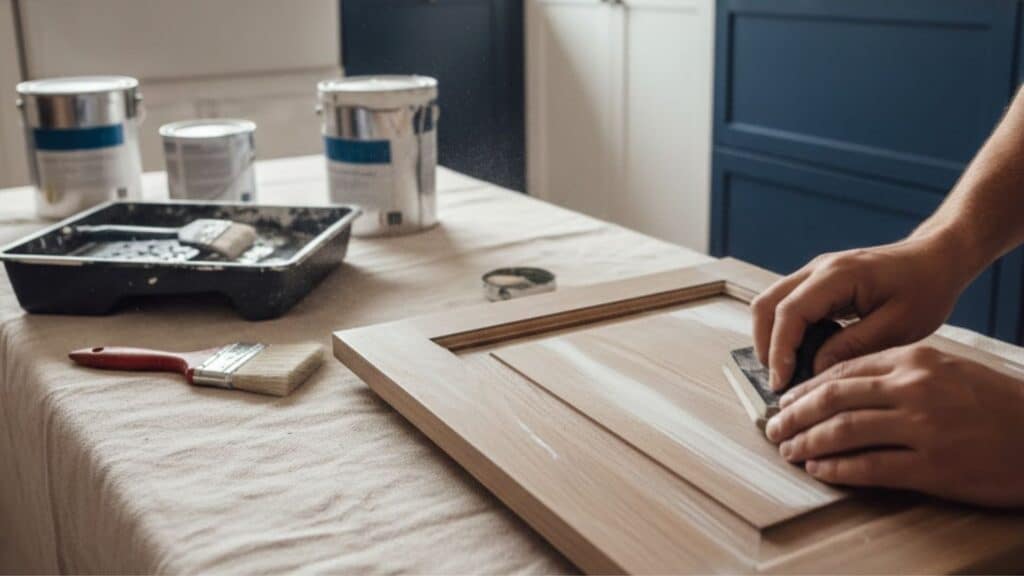
Several key factors determine how much you’ll spend on painting your kitchen cabinets professionally or yourself. Here are the main variables that impact your final bill:
1. Type and Size of Your Cabinets
The number of cabinet doors and drawers directly affects your total painting cost for the project. More cabinets mean more time, materials, and labor required to complete the job properly.
Complex cabinet styles like inset or raised-panel designs cost more than simple flat-panel doors. Intricate details require extra prep work and additional coats for even coverage.
2. Quality of Paint and Materials
Paint quality ranges from budget-friendly options to premium brands costing significantly more per gallon. Higher-quality paints provide better coverage, durability, and a smoother finish that lasts longer without chipping.
Primers, topcoats, brushes, rollers, and other supplies add to your material costs significantly. Investing in quality materials upfront saves money later by reducing touch-ups.
3. Preparation Work
Proper cabinet preparation is essential for paint adhesion and determines how professional your finished cabinets look. Thorough cleaning removes grease and grime that prevent paint from sticking properly to surfaces.
Sanding creates a rough surface that helps new paint bond securely to old finishes. Skipping proper prep work leads to peeling paint and disappointing results.
4. Labor Costs
Professional painters typically charge between thirty and sixty dollars per hour, depending on experience level. Some contractors prefer flat project rates based on cabinet count rather than charging hourly fees.
Your location significantly impacts labor costs, with urban areas charging higher rates than rural communities. Getting multiple quotes helps you find fair pricing while ensuring quality workmanship.
DIY vs. Professional: Kitchen Cabinet Painting Costs
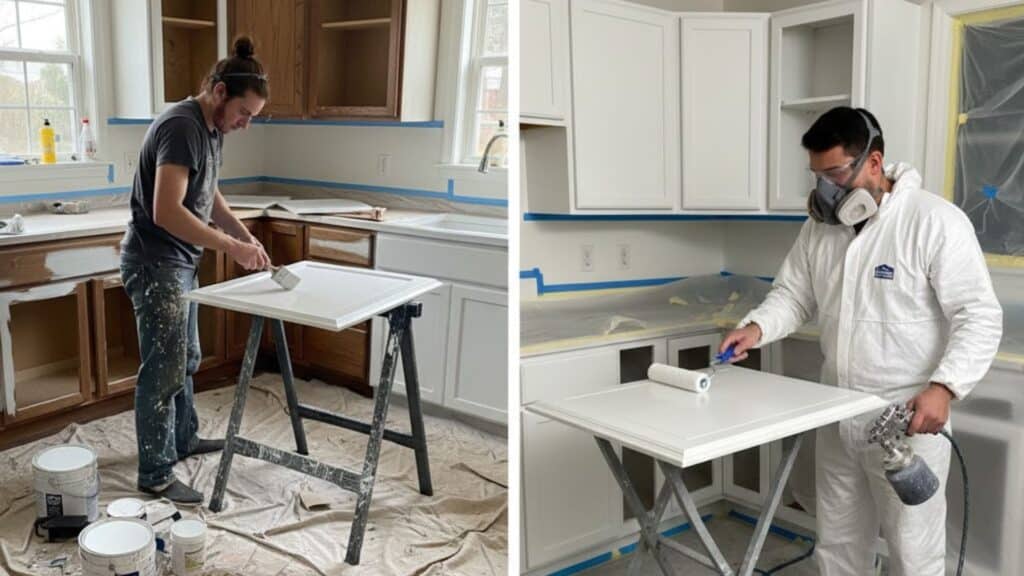
Choosing between DIY and hiring professionals depends on your budget, skill level, and available time. Here’s how the costs compare for both approaches:
DIY Cost Breakdown
Taking on cabinet painting yourself saves money on labor but requires significant time and effort. Understanding all the costs involved helps you decide if DIY makes sense for your situation. Here’s what you’ll spend on a DIY project:
- Materials and Supplies: Paint costs twenty to sixty dollars per gallon, plus brushes, rollers, sandpaper, primer, and drop cloths, which add another fifty to a hundred dollars total.
- Time Investment: Expect to spend twenty to forty hours spread across several days to allow proper drying time between multiple coats.
- Hidden Costs: Mistakes can require buying extra materials or hiring professionals to fix problems, potentially increasing your budget unexpectedly.
DIY works best if you have painting experience and can commit dedicated time to the project. Lack of proper tools or skills often leads to frustrating results that cost more to correct later.
Professional Cost Breakdown
Hiring professional painters eliminates the time commitment and ensures quality results with proper techniques and equipment. Professionals bring expertise that prevents costly mistakes and delivers durable finishes that last for years. Here’s what professional services typically cost:
- Labor Rates: Painters charge between $25 and $50 per hour, with rates varying by location and experience level.
- Project-Based Pricing: Most contractors offer flat rates ranging from $1,200 to $7,000 for average-sized kitchens instead of hourly billing.
- What’s Included: Labor costs cover thorough surface preparation, primer application, multiple paint coats, handling of hardware, and complete cleanup upon completion.
Professional services cost more upfront but save time and deliver better results than DIY attempts by inexperienced professionals. Complex projects with intricate cabinetry or special finishes push costs toward the higher end of the range.
How to Calculate the Cost of Painting Your Kitchen Cabinets
Estimating your cabinet painting costs accurately helps you budget properly and avoid financial surprises during the project. Whether you choose DIY or professional services, following a clear calculation process gives you realistic cost expectations:
Step-by-Step Cost Calculation for DIY
Calculating DIY costs requires measuring your cabinets and pricing out all necessary materials before you start. Accurate estimates prevent running out of supplies mid-project or overspending on unnecessary products. Follow these steps to calculate your DIY cabinet painting costs:
- Step 1: Count all cabinet doors, drawer fronts, and cabinet boxes to determine total square footage needing paint coverage.
- Step 2: Divide total square footage by paint coverage rate, usually three hundred to four hundred square feet per gallon, listed on cans.
- Step 3: Add costs for paint, primer, sandpaper, brushes, rollers, tape, drop cloths, and cleaning supplies from your local hardware store.
- Step 4: Include an extra ten to twenty percent for unexpected needs like additional coats, repairs, or replacing damaged materials during work.
These calculations give you a realistic budget range before purchasing any supplies or starting your painting project. Always round up quantities to avoid multiple store trips that waste valuable time and gas money.
Step-by-Step Cost Calculation for Professionals
Getting accurate professional estimates requires requesting detailed quotes that break down all project costs and timelines clearly. Understanding what contractors include in their pricing helps you compare quotes fairly and choose the best option. Here’s how to calculate professional cabinet painting costs:
- Step 1: Contact at least three local painters and ask for detailed written estimates that itemize labor, materials, and timeline expectations.
- Step 2: Determine if contractors charge hourly rates or flat project fees based on cabinet count, size, and complexity level.
- Step 3: Check if estimates include paint, primer, hardware removal, and protective materials, or if you need to purchase these separately.
- Step 4: Add costs for repairs, special finishes, hardware replacement, or extended warranties that may not appear in base quotes.
Professional estimates typically range from twelve hundred to seven thousand dollars, depending on kitchen size and project complexity. Comparing detailed quotes side by side reveals which contractor offers the best overall value for your specific needs.
Hidden Costs You Should Be Aware Of
Cabinet painting projects often come with unexpected expenses that catch homeowners off guard during the work. Additional paint coats may be needed if the first application doesn’t provide adequate coverage or color depth.
Damaged cabinets require repairs like filling holes or fixing loose hinges before any painting can begin properly.
Professional services can add hundreds to your bill when you need custom finishes or specialized techniques. Sanding services, cabinet door removal, and detailed prep work all increase the final cost beyond basic estimates.
DIY mistakes create the most frustrating hidden expenses when things go wrong during your project. Uneven finishes or poor adhesion mean buying more materials to fix problems or hiring professionals.
Average Costs Based on Kitchen Size
Your kitchen size directly impacts how much you’ll spend on cabinet painting for the entire project. Smaller kitchens naturally cost less than larger spaces with more cabinets to paint and prepare. Here’s what you can expect to pay based on your kitchen size:
| Kitchen Size | Cabinet Count | DIY Cost Range | Professional Cost Range | Time Investment |
|---|---|---|---|---|
| Small Kitchen | 1-10 cabinets | $200-$500 | $1,200-$2,500 | 15-25 hours for DIY, 1-2 days for professionals |
| Medium Kitchen | 10-20 cabinets | $500-$1,000 | $2,500-$4,500 | 25-40 hours for DIY, 2-4 days for professionals |
| Large Kitchen | 20+ cabinets | $1,000-$1,800 | $4,500-$7,000+ | 40-60+ hours for DIY, 4-7 days for professionals |
These estimates provide general guidelines, but your actual costs may vary based on paint quality and complexity. Getting quotes from local contractors helps you understand specific pricing for your unique kitchen layout and needs.
Is It Worth Hiring a Professional or Doing It Yourself?
Deciding between DIY and professional help depends on your budget, available time, and painting experience level.
DIY cabinet painting saves money on labor costs and gives you complete control over every project detail. You’ll feel personal satisfaction from completing the work yourself, and you can work at your own pace.
However, professionals deliver faster results with high-quality finishes that last longer without common DIY mistakes. They bring proper equipment, proven techniques, and warranties that protect your investment if problems arise later.
Complex projects with intricate cabinetry or large kitchens benefit most from professional expertise and efficiency. Consider your priorities carefully before choosing the approach that fits best.
That’s a Wrap!
Now you understand exactly what influences the cost to paint kitchen cabinets for any project size. I’ve shown you how DIY and professional options compare in terms of expenses and time investment.
Your decision should align with your budget, skill level, and the time frame for completing the work. Remember that quality materials and proper preparation prevent costly mistakes that require later fixes.
Kitchen cabinet painting converts your space affordably when you plan carefully and choose the right approach. Your beautiful kitchen refresh is totally achievable with smart planning and realistic expectations about expenses.
Ready to start your cabinet painting project? Share your biggest budget concern in the comments below!