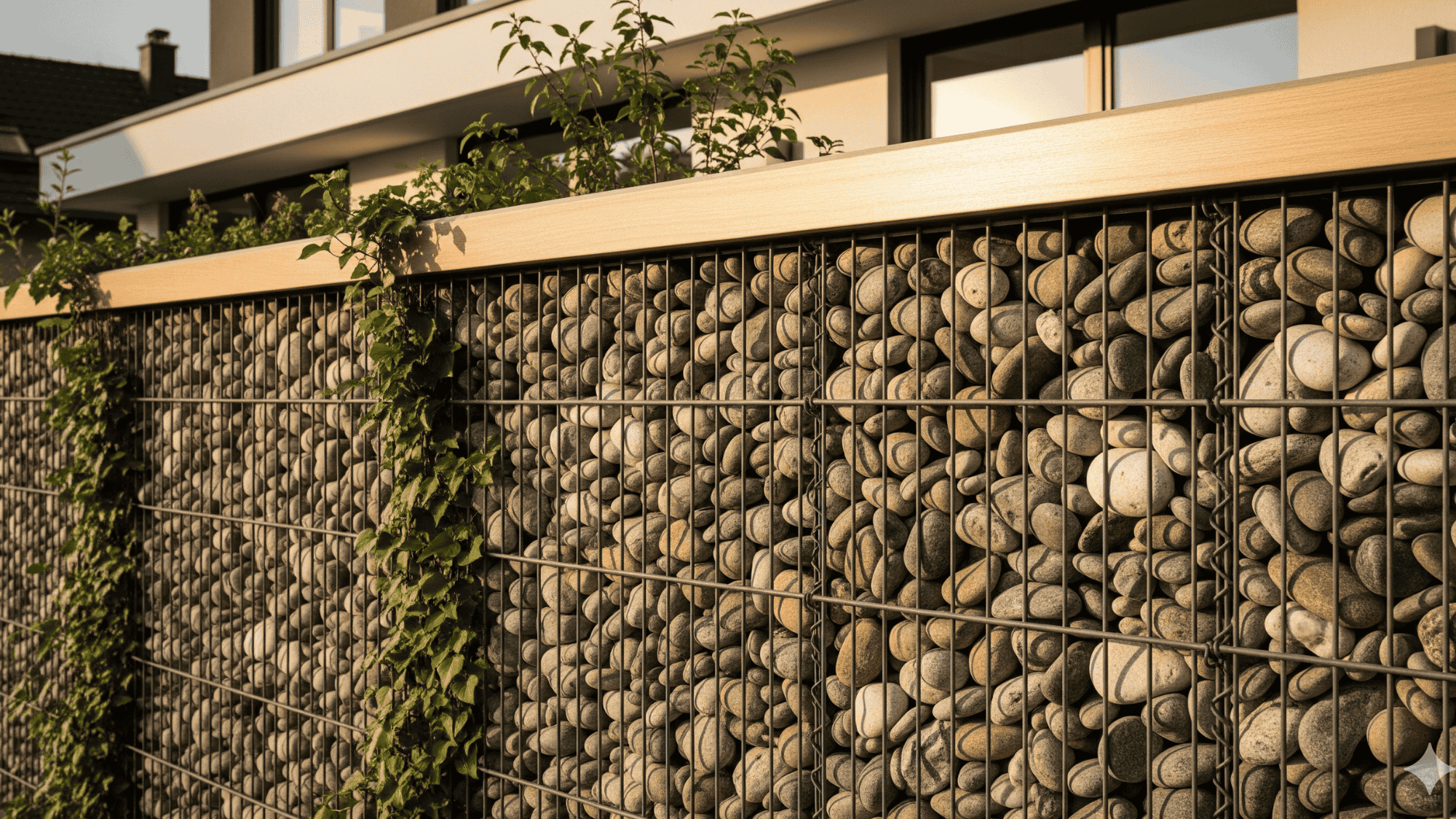
Gabion retaining walls are a go-to for me, and for many homeowners and builders, when we want a strong, natural-looking way to manage soil.
I build them with wire cages filled with rocks or recycled materials, which gives solid strength and a rustic look.
I also prefer gabions over plain concrete because they let water drain easily, making them durable and practical in lots of settings.
In this guide, I’ll walk you through the benefits, uses, and the steps I follow to design and build a gabion retaining wall.
Why Choose a Gabion Wall?
Gabion walls strike a balance between strength, drainage, and style, making them a smart choice for homes and public spaces. Here’s why builders and DIYers increasingly prefer them today worldwide.
- Acts as a gravity wall, resisting soil pressure through mass. PVC or Galfan coatings boost corrosion resistance, providing lifespans of 50–60 years.
- Stone-filled cages allow water to pass through, reducing pressure. Add geotextile and gravel backfill to prevent silt migration and maintain open drainage.
- Utilize local stone or recycled materials for savings and a stylish look. Create planters, benches, fire pits, or terraces that blend beautifully.
Together, these benefits make gabions a durable, low-maintenance, and attractive choice for landscapes, from backyard projects to demanding civil applications.
Common Uses of Gabion Retaining Walls
These are some common uses of Gabion retaining walls:
- Roadways and Highways: Preventing Landslides and Soil Erosion.
- Riverbanks and Shorelines: Controlling erosion from water flow.
- Residential Gardens: Creating raised beds, boundary walls, or decorative features.
- Hillsides and Slopes: Stabilizing soil after heavy rain or construction.
Example: Imagine a sloped backyard that keeps washing away after storms. A gabion retaining wall can hold the soil in place while adding a rustic, natural look.
Planning and Design Considerations for a Gabion Retaining Wall
Before building a gabion retaining wall, careful planning is essential. A poorly designed wall may fail, especially if it’s tall or holding back heavy soil. Here are key things to think about:
| Factor | Key Considerations | Design Guidelines |
|---|---|---|
| Soil Type and Load | Sandy soil drains quickly but may shift; clay holds water, increasing pressure | Weak soils often require reinforcement, such as geotextile fabric |
| Wall Height and Thickness | The taller the wall, the stronger its base needs to be | Make the base at least half as wide as the wall’s height for stability |
| Drainage Design | Critical to prevent water buildup behind the wall | Add gravel backfill or drainage pipes to reduce pressure and prevent water damage |
| Stepped or Tiered Walls | For very tall walls, building in steps or tiers is safer than single vertical walls | This design distributes pressure evenly and adds to the garden’s appeal |
| Style | Gabion walls serve functional and aesthetic purposes | Choose stone colors and sizes that match the environment |
Step-by-Step DIY Guide for Gabion Retaining Wall
Before you begin, you will need the following tools and materials.
Tools:
Materials:
- Cattle panels (wire mesh)
- 7/8″ hog rings
- High tensile wire (for stabilizers)
- Riprap stones (large angular rocks)
- Plywood (optional, for erosion control behind wall)
- Backfill soil or dirt
Building a gabion wall can be a fun DIY project if the wall is small to medium in size. Here’s how you can do it.
1. Planning & Measuring
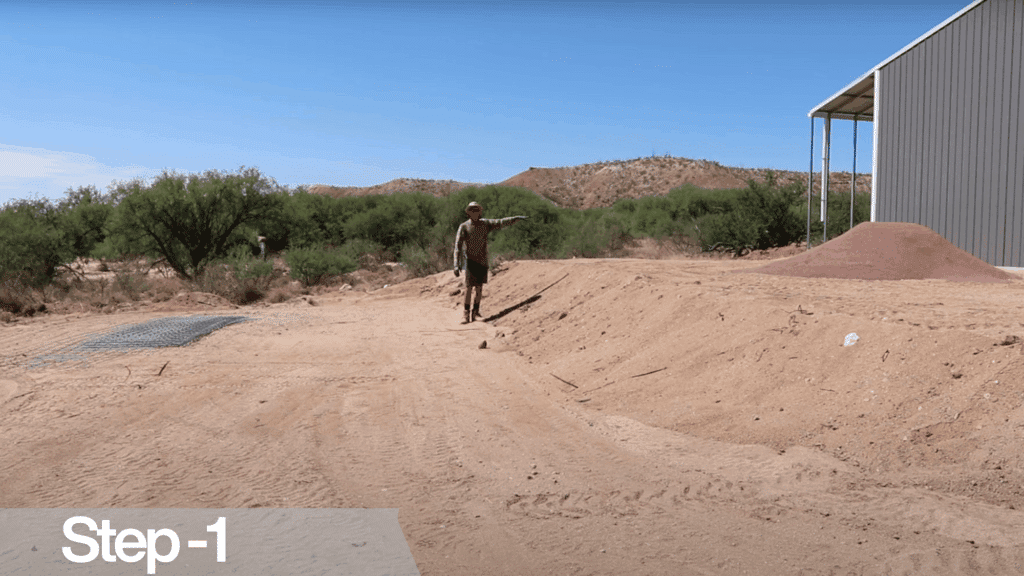
Start by measuring and marking the location for the gabion retaining wall using string lines and T-posts to ensure a straight and parallel alignment.
Use tools like a laser level to verify horizontal and vertical alignment before construction, ensuring the base is properly set.
2. Materials Preparation
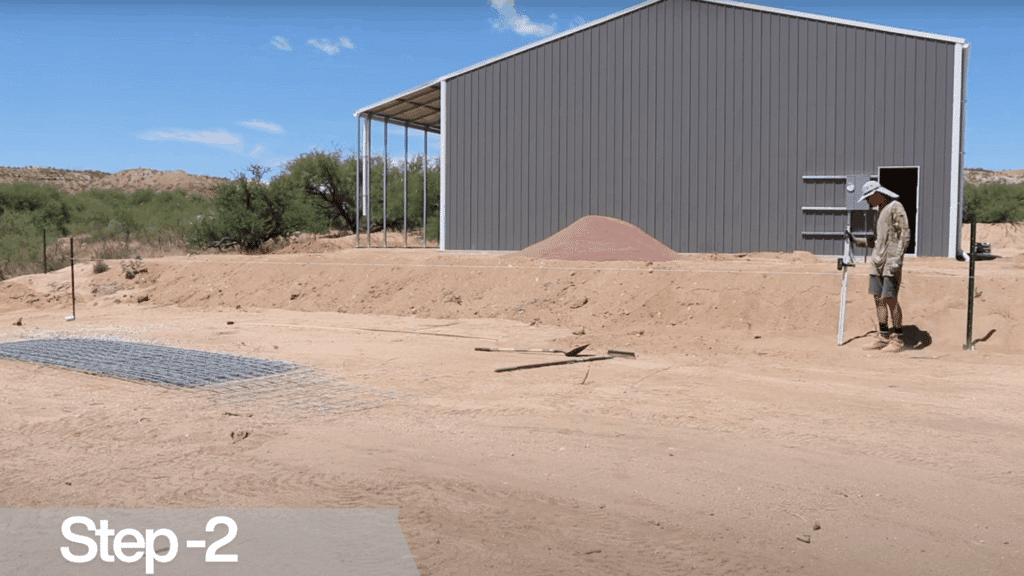
Gather all necessary materials, including cattle panels, hog rings, high-tensile wire, and riprap stones. Quality cattle panels provide the main structure, while hog rings and wires act as fasteners and stabilizers.
Prepare tools like hog ring pliers and cutting tools. The choice of sturdy, durable materials ensures the durability and strength of the gabion wall.
3. Cutting and Assembly of Panels
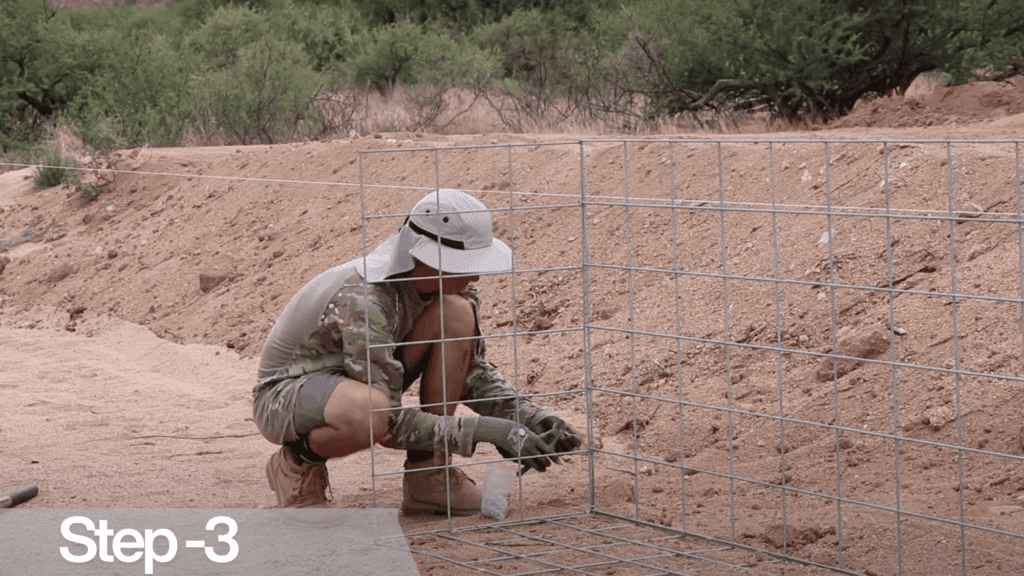
Cut the cattle fencing panels to size using an angle grinder or heavy-duty cutters, removing any protruding weld nubs. Assemble panels with hog rings spaced evenly for a strong connection.
Attach the front, back, and side panels to form a basket that will hold the stone fill. Secure all connections tightly to maintain the basket’s shape.
4. Building Base & Wall Dimensions
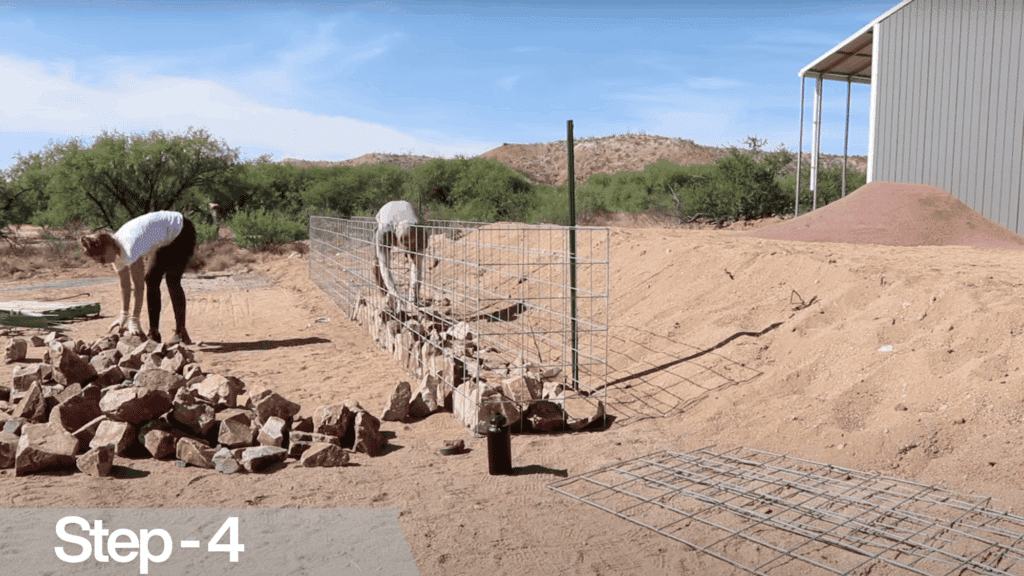
Follow the 2:1 rule for base width to height; for example, a three-foot-tall base requires a one-and-a-half-foot-wide base. The base should be leveled precisely with a laser.
Set up the first gabion basket aligned parallel to the building, leveling it carefully to create a solid foundation for the retaining wall. This enhances structural integrity.
5. Securing & Stabilizing the Wall
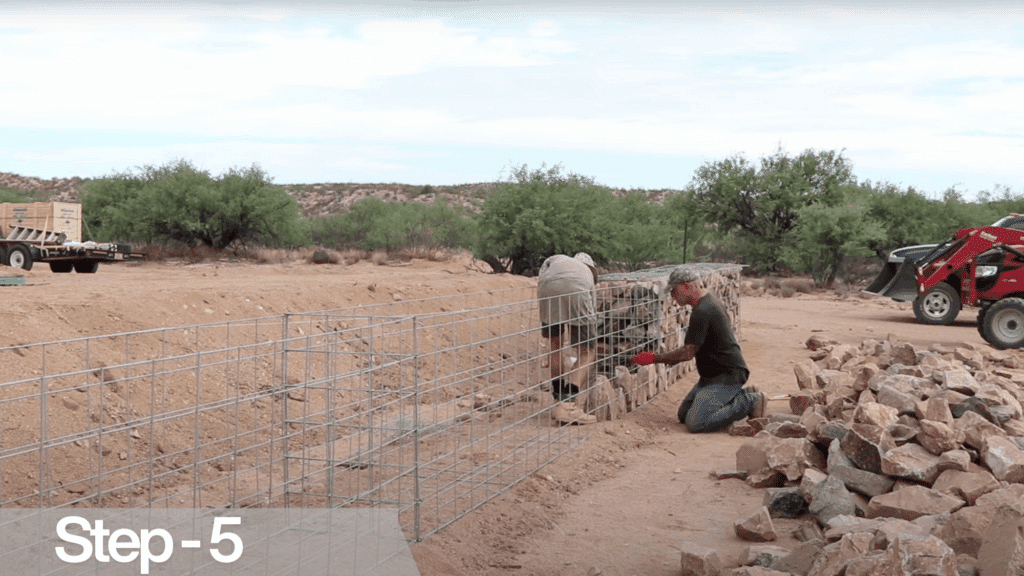
Cut high tensile wire pieces to act as stabilizers inside the gabion basket, attaching them every 16 inches horizontally and strategically vertically near the top and bottom.
Twist the wires tight to resist bulging from the heavy stones inside. These stabilizers maintain the basket’s shape and ensure the wall’s strength as it fills and rises.
6. Filling the Gabion
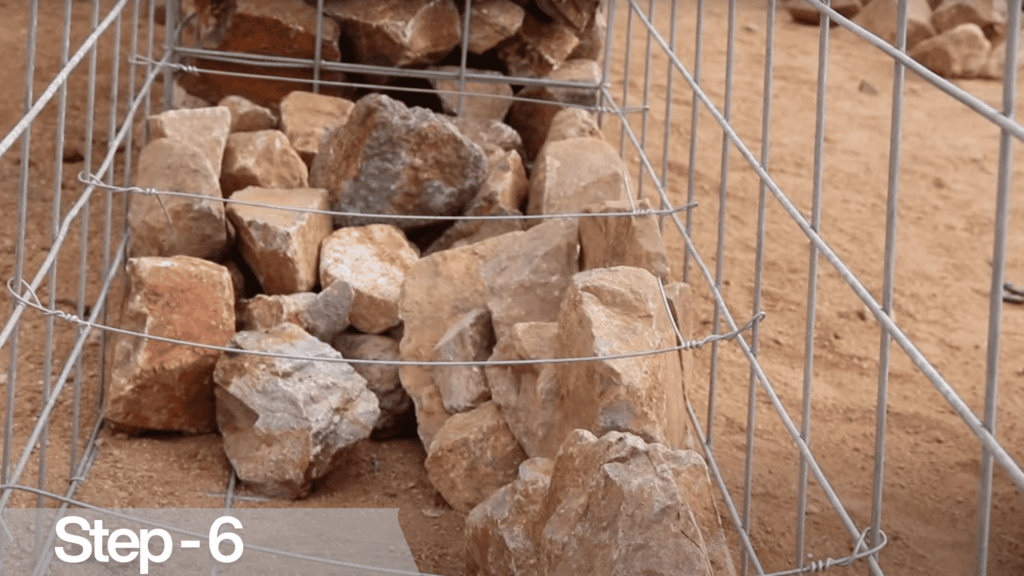
Place large riprap stones inside the basket, arranging the flat and visually appealing stones on the exposed front face to form a natural jigsaw puzzle pattern.
Fill corners and edges tightly with stones to avoid deformities. Carefully placing stones prevents bulging and provides an aesthetic finish, blending the wall with the landscape.
7. Completing the Wall
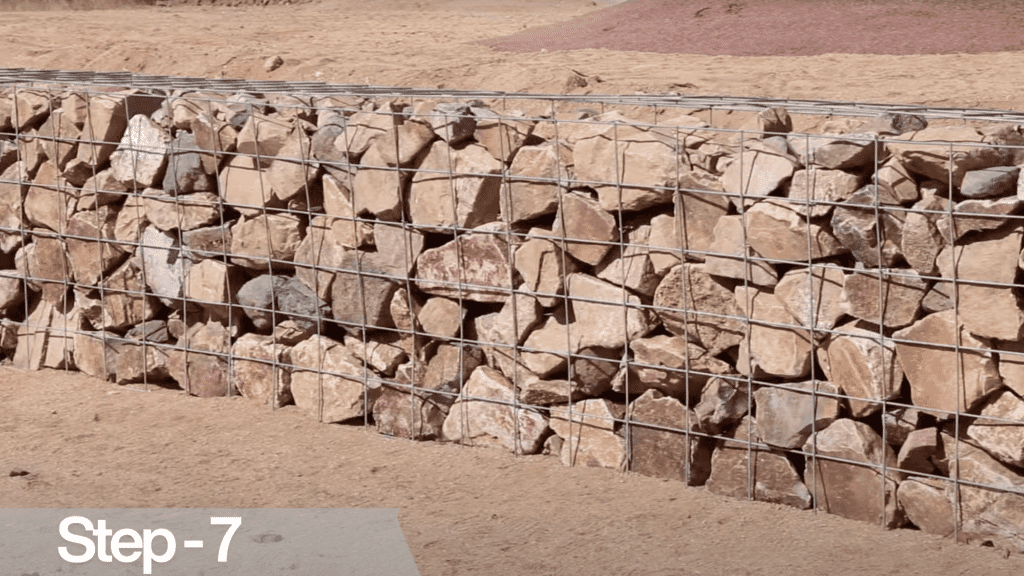
Once filled, close the top of the gabion basket with hog rings to securely contain the stones. Add plywood behind the panel to prevent sand erosion through gaps if necessary.
Backfill behind the wall with compacted dirt mixed with water to solidify the foundation and prevent shifting, ensuring the wall’s long-term stability and durability.
For a more detailed visual guide, check out this video:
Maintenance and Longevity of Gabion Retaining Walls
One of the best aspects of gabion retaining walls is that they require minimal upkeep. Still, a little care goes a long way:
| Maintenance Task | What to Do | Notes |
|---|---|---|
| Check for Wire Damage | Look for rust or broken ties | Galvanized or PVC-coated wire lasts longer than plain steel |
| Watch for Settling Stones | If rocks shift, refill gaps to keep the wall stable | After rain, pack small angular stones into gaps and hand-tamp |
| Encourage Plant Growth | Plant vines or groundcover near the wall | Improves appearance and adds extra stability |
With proper care, a gabion wall can last 30–50 years or more.
Aesthetic & Functional Applications of Gabions
Gabions are not just strong retaining structures. They can also serve as versatile design elements that bring both function and style to outdoor spaces.
1. Garden Features
Gabions can be adapted into a wide range of outdoor structures that balance durability with aesthetics:
- Planters – Raised gabion planters provide excellent drainage and create a bold, modern frame for flowers, shrubs, or even small trees.
- Seating – Low gabion benches topped with wood, stone slabs, or cushions offer a sturdy and rustic alternative to conventional patio furniture.
- Fire Pits – Circular or square gabion fire pits add character and serve as a focal point in a backyard gathering space.
- Water Features – Incorporating gabions into fountains, ponds, or cascades brings a natural feel while providing a strong base for flowing water.
- Privacy Screens – Tall, narrow gabion panels filled with stone or mixed materials can act as semi-permeable walls, offering both screening and style.
2. Creative Fills
The beauty of gabions lies in their flexibility—you can use more than just stone to create eye-catching designs:
- Reclaimed Brick – Adds warmth and texture, especially in traditional or rustic landscapes.
- Logs or Timber Slices – Introduce organic contrast when paired with stone, ideal for woodland or eco-friendly settings.
- Colored Stone or Glass – Adds vibrancy, patterns, or highlights, turning a functional wall into a striking visual statement.
Tip: Always ensure the outer face of the gabion is packed tightly with uniform material. This maintains stability and creates a clean, polished look, while less uniform filler can be placed toward the center.
3. Terracing & Retaining
For sloped or uneven yards, gabions provide structural support while enhancing the overall design:
- Tiered Walls – Break steep slopes into manageable, flat terraces that can be used for gardens, patios, or pathways.
- Erosion Control – Strong stone-filled cages hold soil in place, preventing washouts and preserving the landscape.
- Visual Impact – Unlike plain concrete retaining walls, gabions offer texture, depth, and a natural stone look that blends into outdoor environments.
Conclusion
A gabion retaining wall is one of the most practical and natural ways to prevent erosion, stabilize soil, and uplift landscapes.
It combines strength, beauty, and affordability in a way that few other retaining walls can match.
For small landscaping projects, building your own gabion wall can be a rewarding and cost-effective option. For bigger or more complex jobs, hiring a professional ensures safety and long-term stability.
If you’re a homeowner wanting to improve your garden or a contractor looking for a strong solution to soil erosion, a gabion wall is a smart investment that can last for decades.