
Ordering windows should be simple, but many homeowners discover too late that one small measuring mistake can ruin the entire project.
I learned this lesson after seeing perfectly good windows arrive that simply would not fit the opening. The confusion usually comes from not understanding the difference between window dimensions and rough opening measurements.
A clear window size chart removes this guesswork by showing how standard window sizes relate to actual framed openings.
In this guide, I explain how window sizing works, how to read manufacturer charts, and why those numbers matter before placing an order.
The article also covers common standard sizes, situations where custom windows are required, and how to avoid costly errors. Getting window measurements right from the start saves time, money, and frustration.
What Are Window Sizes vs Actual Openings
Window sizes and rough openings are two different measurements that often confuse homeowners. The window size refers to the actual dimensions of the window unit itself, the glass, frame, and all components combined.
The rough opening, on the other hand, is the hole cut into the wall where the window will be installed. This opening is typically 1-2 inches larger than the actual window to allow space for leveling, insulation, and proper installation.
Understanding this difference is crucial when ordering new windows. A window size chart helps match the right window unit to the correct rough opening size.
Getting these measurements wrong can lead to costly returns or installation delays.
How to Read Window Sizes
Window sizing often uses a short numeric code that represents width and height rather than exact inches.
Most manufacturers follow a four-digit format where the first two numbers indicate width, and the last two indicate height, measured in feet and inches.
For example, a window marked 2846 typically translates to 2 feet 8 inches wide and 4 feet 6 inches tall, or 32 by 54 inches. These labels may describe the window unit itself or the rough opening required in the wall.
A clear window size chart helps explain which measurement applies in each case. Always verify how the manufacturer defines sizing before ordering to avoid fit issues.
Window Rough Opening vs Standard Size Chart
Below are the most common US window sizes, along with their corresponding actual frame dimensions and rough opening requirements. Values represent typical residential standards.
1. Single-Hung & Double-Hung Windows
Single-hung and double-hung windows use the most common standard sizes in US homes. Below are the typical nominal, actual, and rough opening dimensions.
| Nominal Size | Actual Frame Size (W × H) (in) | Rough Opening (W × H) (in) |
|---|---|---|
| 2030 | 23.5 × 35.5 | 24 × 36 |
| 2040 | 23.5 × 47.5 | 24 × 48 |
| 2050 | 23.5 × 59.5 | 24 × 60 |
| 3030 | 35.5 × 35.5 | 36 × 36 |
| 3040 | 35.5 × 47.5 | 36 × 48 |
| 3050 | 35.5 × 59.5 | 36 × 60 |
| 3060 | 35.5 × 71.5 | 36 × 72 |
| 4040 | 47.5 × 47.5 | 48 × 48 |
| 4050 | 47.5 × 59.5 | 48 × 60 |
2. Casement Windows
Casement window sizes follow a similar nominal pattern to hung windows, but their frame and rough opening dimensions vary slightly due to hinge hardware.
| Nominal Size | Actual Frame Size (W × H) (in) | Rough Opening (W × H) (in) |
|---|---|---|
| 2030 | 23.5 × 35.5 | 24 × 36 |
| 2040 | 23.5 × 47.5 | 24 × 48 |
| 2050 | 23.5 × 59.5 | 24 × 60 |
| 3030 | 35.5 × 35.5 | 36 × 36 |
| 3040 | 35.5 × 47.5 | 36 × 48 |
| 3050 | 35.5 × 59.5 | 36 × 60 |
| 3060 | 35.5 × 71.5 | 36 × 72 |
3. Sliding Windows
Sliding windows use standard height groups with wider frame options. These are the most common sliding window sizes used in residential installs.
| Nominal Size | Actual Frame Size (W × H) (in) | Rough Opening (W × H) (in) |
|---|---|---|
| 2030 | 23.5 × 35.5 | 24 × 36 |
| 2040 | 23.5 × 47.5 | 24 × 48 |
| 2050 | 23.5 × 59.5 | 24 × 60 |
| 3030 | 35.5 × 35.5 | 36 × 36 |
| 3040 | 35.5 × 47.5 | 36 × 48 |
| 3050 | 35.5 × 59.5 | 36 × 60 |
| 4040 | 47.5 × 47.5 | 48 × 48 |
| 4050 | 47.5 × 59.5 | 48 × 60 |
4. Picture / Fixed Windows
Picture windows have fewer moving parts, so their actual frame sizes more closely match nominal dimensions. These are the typical sizes for fixed units.
| Nominal Size | Actual Frame Size (W × H) (in) | Rough Opening (W × H) (in) |
|---|---|---|
| 2030 | 23.5 × 35.5 | 24 × 36 |
| 3040 | 35.5 × 47.5 | 36 × 48 |
| 3050 | 35.5 × 59.5 | 36 × 60 |
| 4040 | 47.5 × 47.5 | 48 × 48 |
| 5050 | 59.5 × 59.5 | 60 × 60 |
| 6060 | 71.5 × 71.5 | 72 × 72 |
5. Awning Windows
Awning windows are usually small to mid-sized units. Here are the standard awning window dimensions used in most US product lines.
| Nominal Size | Actual Frame Size (W × H) (in) | Rough Opening (W × H) (in) |
|---|---|---|
| 2020 | 23.5 × 23.5 | 24 × 24 |
| 2030 | 23.5 × 35.5 | 24 × 36 |
| 2040 | 23.5 × 47.5 | 24 × 48 |
| 3030 | 35.5 × 35.5 | 36 × 36 |
6. Hopper Windows
Hopper windows are often used in basements and utility spaces. These are the typical hopper window size combinations.
| Nominal Size | Actual Frame Size (W × H) (in) | Rough Opening (W × H) (in) |
|---|---|---|
| 1616 | 15.5 × 15.5 | 16 × 16 |
| 2024 | 23.5 × 27.5 | 24 × 28 |
| 2030 | 23.5 × 35.5 | 24 × 36 |
7. Bay & Bow Windows
Bay and bow windows come as assembled units rather than single windows, so sizes are grouped by total unit width instead of individual nominal sizes.
| Configuration | Actual Unit Width (in) | Rough Opening Width (in) |
|---|---|---|
| 3-panel bay (30°) | 60–72 | +1 inch |
| 3-panel bay (45°) | 60–78 | +1 inch |
| 4-panel bow | 80–120 | +1 inch |
| 5-panel bow | 100–150 | +1 inch |
Download the printable versions of charts here.
Why Certain Window Types Don’t Have Standard Sizes
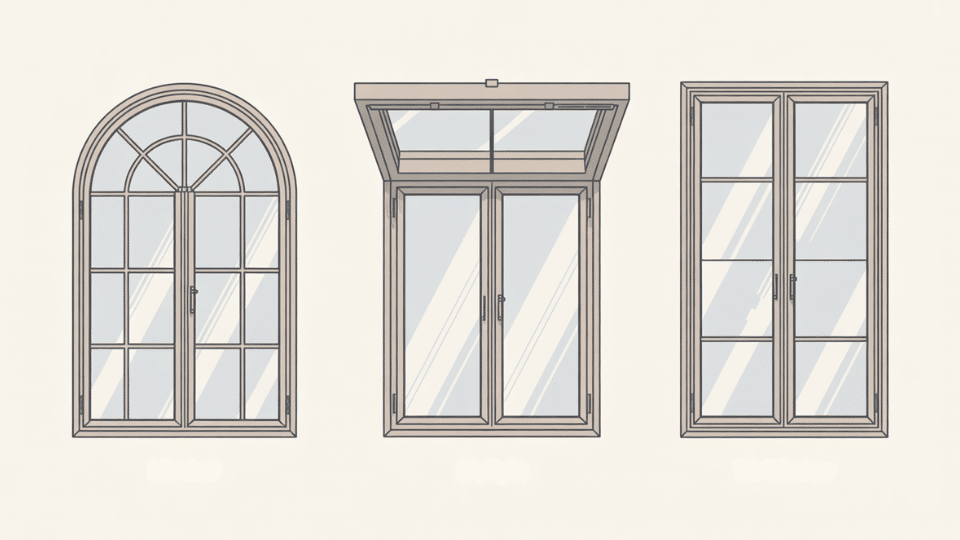
Some window styles follow clear, universal dimensions, while others vary too widely to chart. Understanding which types lack standard sizes helps readers avoid measurement errors and installation surprises.
- Custom fabrication: Arched, circular, triangular, and other specialty windows are built individually, so no shared measurements exist.
- Brand-specific dimensions: Skylights and garden windows vary widely between manufacturers, making a universal window size chart inaccurate.
- Architectural or oversized designs: Floor-to-ceiling units, multi-panel assemblies, and window walls follow structural requirements rather than fixed nominal sizes.
- Code-driven sizes: Egress windows are sized by minimum clear-opening rules, not by set series, which prevents consistent rough-opening guidelines.
This is why only the seven standard window categories can be charted reliably, especially when comparing actual dimensions and window rough opening size needs.
The Bottom Line
Choosing the correct window is never just about style; it comes down to accurate sizing and informed decisions. I see many replacement issues happen when the relationship between the framed opening and the finished unit is misunderstood.
A well-built window size chart helps compare standard window sizes with the space available, reducing the risk of ordering errors.
This guide covered how different window types are sized, how rough openings affect installation, and when custom options are the better choice.
Paying attention to these details keeps projects on schedule and budgets intact. I always recommend reviewing manufacturer specs and measuring carefully before committing to a purchase.
If this guide helped clarify window sizing, feel free to explore related articles or share thoughts and questions in the comments.