
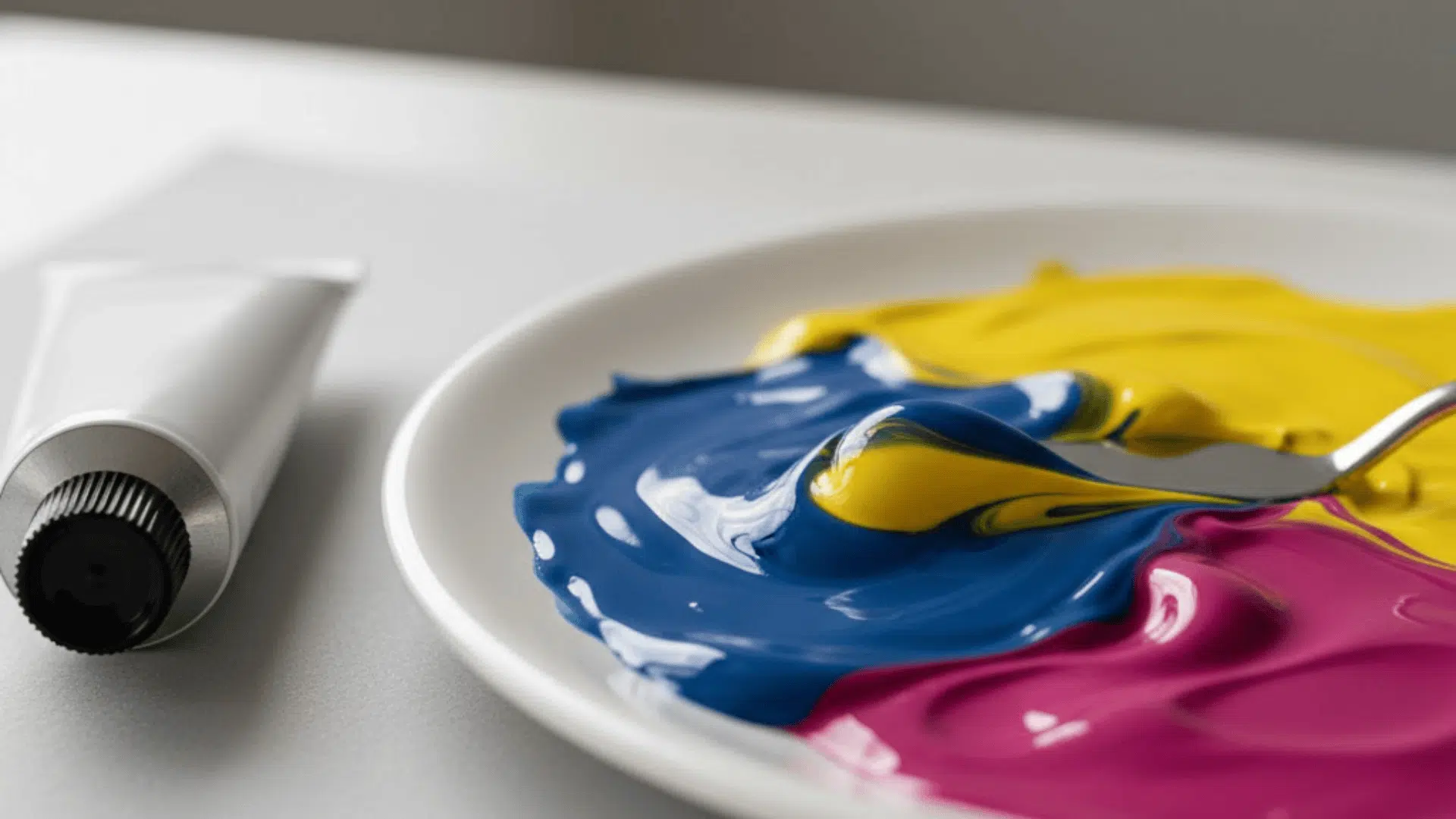
I get it; you’re staring at those vibrant acrylic paints and wondering if you can use them for body art, Halloween makeup, or your next cosplay masterpiece.
Maybe you’ve even spotted “non-toxic” on the label and thought, “Good enough, right?”
Here’s the truth I need to share upfront: acrylic paint simply isn’t designed for skin, even when it’s labeled non-toxic. That designation means something different than “skin-safe.”
Throughout this guide, I’ll walk you through why this matters, what can go wrong, and what safer alternatives you should reach for instead.
Let’s get into how to keep your skin happy while you create something amazing.
What is Acrylic Paint Made Of?
Before we talk about skin safety, let me break down what’s actually in that tube of acrylic paint. You’ve got three main components working together:
- Pigments: The colorants that give paint its hue
- Acrylic polymer emulsion: The plastic binder that holds everything together
- Additives, binders, and preservatives: Chemicals that control texture, drying time, and shelf life
Here’s where things get tricky with labeling. When you see “non-toxic” on acrylic paint, it means the product won’t poison you if accidentally ingested in small amounts; it doesn’t mean it’s safe for skin contact.
Craft paint follows completely different standards from cosmetic-grade products, which must pass rigorous dermatological testing before touching your body.
Is Acrylic Paint Safe for Skin?

I know you’re hoping for a loophole here, but I need to be straight with you. Let me break down exactly why acrylic paint and skin don’t mix, even when that label tries to reassure you otherwise.
1. Why Acrylic Paint Isn’t Skin-Safe?
Acrylic paint isn’t designed or approved for use on skin, period. While it might seem harmless since it’s used in schools and art projects, manufacturers never intended these products to make contact with your body.
There’s no regulatory approval, no dermatological testing, and no quality control for skin application. The formulas are developed specifically for adhesion to canvas, wood, and other surfaces, not living tissue.
2. The Real Risks to Your Skin
The ingredients in acrylic paint haven’t been tested for direct skin contact. Here’s what you’re risking:
- Potential allergens and irritants that trigger reactions
- Harsh drying agents that damage your skin barrier
- Chemical additives are causing mild to serious inflammation
- Pigments that stain or cause sensitivity
- Increased danger in sensitive areas like the face, eyelids, or broken skin
3. Decoding the “Non-Toxic” Label
That “non-toxic” label refers to ASTM D4236 certification, which tests whether a product is safe if a child accidentally swallows a small amount. It has nothing to do with skin safety.
Being safe for painting on canvas or wood doesn’t automatically make it safe for your body; these are entirely different use cases with different safety standards.
Potential Risks of Using Acrylic Paint on Skin
Now that we’ve established acrylic paint isn’t skin-safe, let me show you exactly what can happen when you ignore that warning.
These aren’t just theoretical concerns; they’re documented reactions that people experience when they treat craft paint like body paint.
| Risk | Symptoms | Cause |
|---|---|---|
| Skin Irritation or Dermatitis | Redness, inflammation, persistent discomfort | Chemical disruption of the skin’s protective barrier |
| Allergic Reactions | Itching, hives, rashes, swelling | Sensitizing agents in pigments and preservatives |
| Dryness, Cracking, or Peeling | Flaky, tight skin with visible damage | Acrylic polymers create a water-impermeable film that suffocates cells |
| Chemical Exposure | Absorption of heavy metals or toxic compounds | Pigments not tested for dermal contact enter the bloodstream |
| Removal Damage | Rawness, stripped skin, infection vulnerability | Aggressive bonding requires harsh scrubbing that removes protective oils |
| Higher Risk for Children & Sensitive Skin | Faster, more severe reactions | Thinner skin and developing immune systems absorb chemicals more readily |
Quick Tip: If acrylic paint accidentally gets on your skin during a project, wash it off immediately with soap and lukewarm water. The longer it sits, the harder it becomes to remove and the greater your risk of irritation.
What If Acrylic Paint Gets on Your Skin?
Accidents happen, and if you’ve got acrylic paint on your skin right now, don’t panic. The key is acting quickly and using the right removal method to minimize damage and irritation.
How to Remove Acrylic Paint from Your Skin
Speed matters here. The faster you address wet or drying paint, the easier it comes off and the less risk you face.
Here’s your action plan:
- Wash immediately with warm water and mild soap while the paint is still wet
- Apply baby oil or coconut oil to loosen dried paint, let it sit for a few minutes
- Gently rub with a soft cloth in circular motions, never scrub aggressively
- Use a gentle cleanser or makeup remover for stubborn spots on sensitive areas
- Avoid acetone, nail polish remover, or harsh solvents that cause chemical burns and severe dryness
When to Seek Medical Advice
If you notice persistent redness that doesn’t fade within a few hours, swelling, blistering, or a spreading rash, contact a healthcare provider.
Eye exposure requires immediate medical attention; flush with water for fifteen minutes and head to urgent care or an emergency room right away.
What About Long-Term or Repeated Use?

Using acrylic paint on your skin once might cause temporary irritation, but repeated exposure is where things get seriously problematic.
Habitual face or body painting with acrylics leads to cumulative irritation. Your skin’s protective barrier weakens with each application, making you increasingly vulnerable to allergic reactions, chronic dermatitis, and chemical sensitization.
Over time, you might develop permanent sensitivities to certain pigments or compounds. There’s a reason professional body painters, makeup artists, and cosplayers never touch acrylics for skin work.
They understand that proper body paints and cosmetics exist specifically because skin needs formulations designed for safe, repeated contact. Don’t risk your skin’s long-term health for a temporary look.
Safe Alternatives to Acrylic Paint for Skin
I know you still want to create amazing body art, and I’m here to help you do it safely. Let me walk you through the proper alternatives that give you brilliant color without compromising your skin’s health.
Your best options for safe body art include:
- Cosmetic-Grade Face and Body Paints: FDA-approved products from brands like Mehron, Snazaroo, and Ben Nye. Water-based formulas suit beginners, while alcohol-activated palettes deliver professional results.
- Natural Henna: Creates beautiful temporary designs lasting one to three weeks, though limited to reddish-brown tones and requires patience during application.
- Body Crayons and Temporary Tattoo Inks: Mess-free options perfect for quick designs and kids’ events, though they may lack the vibrancy professionals need.
How to Pick a Safe Skin Paint?
Look for clear labeling that says “cosmetic grade,” “skin-safe,” or “FDA compliant” on the packaging. Check ingredient lists and avoid products with vague or missing information.
Read reviews from other body painters and makeup artists about potential reactions.
When in doubt, do a patch test on your inner forearm twenty-four hours before full application to ensure you don’t have sensitivities to specific formulations.
Comparing Acrylic Paint vs. Skin-Safe Paints
Still wondering if there’s really that much difference between acrylic paint and proper body paint?
Let me break down the key distinctions so you can see exactly why making the switch matters for your skin’s safety and your overall experience.
| Factor | Acrylic Paint | Skin-Safe Paint |
|---|---|---|
| Durability | Lasts long but forms rigid, uncomfortable layer | Flexible wear that moves with your skin without cracking |
| Ease of Removal | Difficult; requires harsh scrubbing that damages skin | Washes off easily with soap and water |
| Comfort | Suffocates pores, feels tight and restrictive | Breathable formulas that let skin function naturally |
| Sensitivity Risks | High risk of irritation, allergic reactions, and dermatitis | Dermatologically tested to minimize reactions |
| Ingredients | Industrial chemicals, heavy metals, untested additives | FDA-compliant, hypoallergenic, cosmetic-grade components |
| Testing Standards | ASTM D4236 for ingestion safety only | Rigorous dermal application and safety evaluations |
If you’ve been using acrylic paint on your skin without issues so far, don’t assume you’re in the clear. Sensitivity can develop over time with repeated exposure, meaning what seems harmless today could trigger serious reactions tomorrow.
Can You Use Acrylic Paint for Handprints or Crafts?

Here’s where things get tricky for parents and teachers. While acrylic paint works beautifully for canvas handprint art, you should avoid direct skin contact whenever possible.
The safest approach is using washable tempera paints or FDA-approved finger paints specifically designed for children’s skin; they’re formulated without harsh chemicals and rinse off easily.
If you must use acrylics for a project, have kids wear disposable gloves or apply paint to pre-cut sponge stamps instead of their bare hands.
Always supervise closely and wash any accidental contact immediately with soap and water. Your child’s skin health isn’t worth the craft project.
Expert Tips for Safe Body Painting
- Always patch test new products on your inner forearm twenty-four hours before full application to catch potential allergic reactions
- Stay away from eyes, lips, and mucous membranes where skin is thinner and absorption rates are dangerously high
- Never mix body paints with household products like lotion, glycerin, or food coloring; you’ll compromise safety standards
- Keep all applicators and products sanitized by washing brushes after each use and never double-dipping into containers
- Invest in quality brushes and sponges designed for cosmetic use rather than craft supplies that harbor bacteria
These precautions might seem excessive, but they’re what separate professional body painters from amateurs dealing with infections and reactions.
Myths & Misconceptions About Acrylic Paint on Skin
I’ve heard every excuse and rationalization for using acrylic paint on skin, and I need to set the record straight. Let’s bust some common myths that keep people making unsafe choices.
Myth 1: It’s Non-Toxic, so It’s Okay
Fact: Non-toxic certification only means the paint won’t poison you if accidentally swallowed in small amounts; it says absolutely nothing about skin safety or dermal irritation.
Myth 2: It Washes Off with Water
Fact: While wet acrylic paint rinses away easily, once it dries it forms a plastic-like film that bonds to your skin and requires aggressive scrubbing that damages your protective barrier.
Myth 3: You Can Dilute It to Make It Skin-Safe
Fact: Diluting acrylic paint with water doesn’t eliminate the harsh chemicals, allergens, or drying agents; you’re simply spreading the same problematic ingredients over a larger area at lower concentrations.
Final Thoughts
I’ve walked you through the science, the risks, and the safe alternatives; now it’s your turn to make the right call.
Is acrylic paint safe for skin? The answer is a clear no, regardless of what that “non-toxic” label suggests.
Your skin deserves better than untested craft supplies, and honestly, proper body paints perform better anyway. They’re designed for what you’re trying to achieve without the health gamble.
If you’ve got questions, experiences with skin reactions, or tips for fellow artists, drop them in the comments below. Let’s keep this conversation going and help others avoid painful mistakes.