Planning a kitchen update means facing one big question: how much will this actually cost? The internet offers wildly different numbers, from $10,000 to over $150,000, leaving most people confused about where their project falls.
The truth is, kitchen remodel cost depends on dozens of variables, from cabinet choices to labor rates and hidden electrical issues discovered mid-project.
This guide breaks down real numbers, explains what drives expenses up or down, and helps build a realistic budget that matches actual scope and available funds.
Kitchen Remodel Cost by Project Type
A kitchen remodel cost in the US typically ranges from $10,000 to over $150,000, depending on the project scale. Minor updates run $10,000-$20,000 and cover essentials like cabinet refacing, new hardware, and appliance swaps.
Mid-range projects cost $20,000-$45,000, replacing countertops, cabinets, and flooring without major layout shifts. Major renovations span $45,000-$80,000 with structural changes and premium finishes.
Luxury rebuilds exceed $80,000, featuring custom cabinetry, designer fixtures, and high-end appliances. Five factors influence the final kitchen renovation cost:
- Project Scope: Cosmetic touch-ups versus full gut jobs
- Kitchen Size: Square footage directly impacts material needs
- Material Quality: Laminate versus granite
- Labor Rates: Regional pricing varies widely
- House Condition: Older homes often need plumbing or electrical upgrades
Understanding these variables sets realistic expectations before planning begins.
What Determines Your Kitchen Remodelling Budget
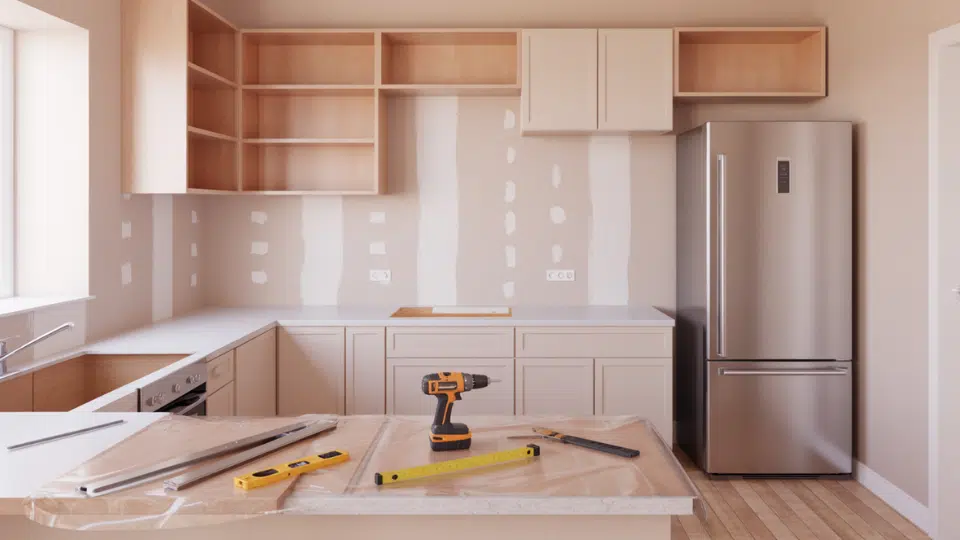
Five elements shape kitchen remodel cost more than anything else: cabinetry choices, countertop materials, appliances with proper ventilation, surface finishes, and professional labor with permits.
1. Cabinets (Usually the Biggest Expense)
Cabinetry consumes 30-40% of the total kitchen remodeling cost. Stock cabinets run $100-$300 per linear foot with limited styles but fast delivery. Semi-custom options cost $150-$650 per linear foot, allowing size modifications and better finishes.
Custom work starts at $500 and exceeds $1,200 per linear foot. Refacing offers savings when cabinet boxes remain solid, new doors and veneer cost $4,000-$10,000 versus $15,000-$40,000 for full replacement.
2. Countertops
Material selection balances cost against performance. Laminate starts around $20-$50 per square foot and needs replacement sooner. Quartz runs $50-$100 per square foot with minimal maintenance and consistent patterns.
Granite costs $40-$100 per square foot, offering natural beauty but requiring annual sealing. Marble ranges from $50-$200 per square foot with high-end appeal, yet stains easily.
The trade-off: durable materials like quartz demand less upkeep, while natural stone like marble delivers visual impact but needs ongoing care.
3. Appliances & Ventilation
Appliances range from $100 for basic units to $5,000+ for professional-grade models. Upgrading to high-powered ranges often requires electrical panel upgrades costing $500-$2,000, plus dedicated circuits at $200-$500 each.
Gas conversions add $400-$2,500 for line installation. Proper ventilation isn’t optional; inadequate airflow causes moisture damage, grease buildup, and poor air quality.
Range hoods cost $200-$2,000 depending on CFM ratings, with installation adding $300-$1,000 for ductwork modifications.
4. Flooring, Backsplash, and Lighting
Vinyl flooring costs $3-$10 per square foot and handles DIY installation well. Tile runs $10-$25 per square foot but demands professional laying.
Hardwood ranges from $12-$20 per square foot. Backsplash tile averages $10-$40 per square foot; simple subway tile works for confident DIYers.
Recessed lighting costs $100-$300 per fixture installed. Pendant lights range from $50-$500 each. DIY works for fixture swaps, but hire electricians for new circuits or panel work.
5. Labor, Permits, and Professional Fees
Labor accounts for 25-35% of total costs, covering demolition, installation, plumbing, and electrical work. General contractors charge $50-$150 per hour, while specialized trades run higher.
Permits cost $500-$3,000 depending on project scope and local requirements, skipping them risks failed inspections and resale issues.
Timeline delays compound expenses fast: extended contractor schedules mean paying workers longer, storing materials, and potentially eating out daily. A two-week delay on a $40,000 project can add $2,000-$4,000 in unexpected costs.
Build Your Own Kitchen Remodel Budget
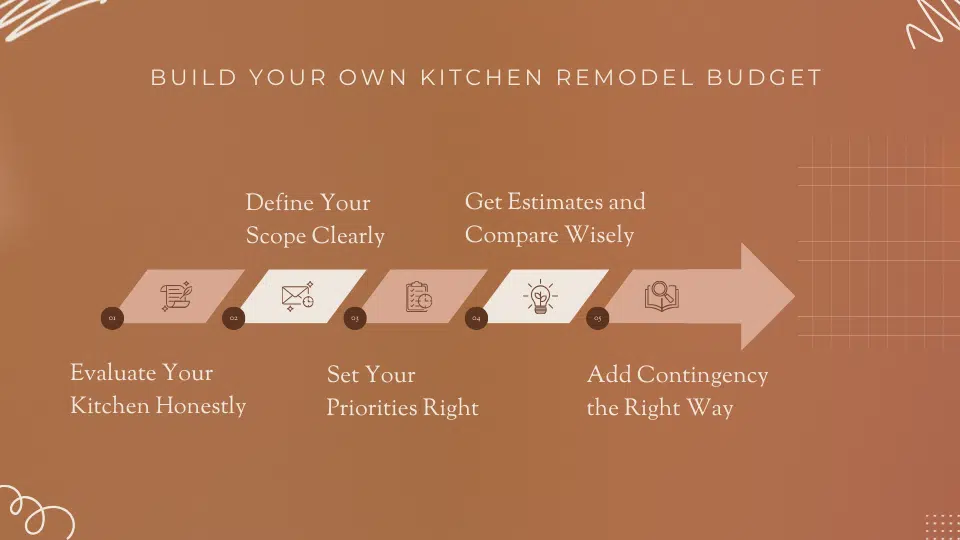
Smart budgeting prevents overspending and project delays. Follow these five steps to build a realistic plan that matches actual needs and available funds.
Step 1: Evaluate Your Kitchen Honestly
- Size and square footage: Larger spaces require more materials, driving up costs
- Current condition: Note outdated wiring, plumbing issues, or water damage
- Layout restrictions: Identify load-bearing walls, fixed plumbing locations, and gas lines
- Warning signs that increase cost: Asbestos, mold, failing subfloors, insufficient electrical capacity
Step 2: Define Your Scope Clearly
- $10K-$20K scope: Cabinet refacing, new countertops, updated hardware, fresh paint, minor appliance swaps
- $20K-$45K scope: New stock or semi-custom cabinets, mid-grade appliances, countertops, and flooring replacement
- $45K-$90K scope: Layout modifications, custom cabinetry, premium appliances, all-new electrical and plumbing
- $90K+ scope: Complete rebuild with structural changes, luxury finishes, high-end appliances, custom everything
Step 3: Set Your Priorities
- Function beats finishes: Invest in better workflow and storage before splurging on luxury surfaces
- Optimize layout first: Fix traffic flow, work triangle, and storage inefficiencies before selecting materials
- Smart trade-offs: Allocate budget to high-use areas (countertops near stove, primary sink) while using economical options in low-traffic zones
- Skip trendy, choose evergreen: Neutral cabinetry and classic layouts hold value longer than current fads
Step 4: Get and Compare Estimates Wisely
- Ask contractors these questions: Timeline expectations, subcontractor names, insurance coverage, payment schedule, warranty terms
- Good quotes must include: Itemized material costs, labor breakdown by trade, permit fees, disposal costs, start and completion dates, and change order policy
- Red flags in low bids: Missing permit costs, vague “allowances” without specifics, no demolition or disposal mentioned, pressure to sign immediately, no proof of insurance
- Get 3-5 estimates minimum: Compare line items, not just totals, to spot missing work or unrealistic pricing
Step 5: Add Contingency the Right Way
- Set aside 15-20% minimum: This covers inevitable surprises without derailing the project
- Common surprise costs: Hidden water damage behind walls, outdated electrical requiring panel upgrades, asbestos or lead paint removal, structural issues once walls open
- Don’t touch contingency for upgrades: Reserve it strictly for problems discovered during demolition, not material splurges mid-project
Hidden Costs You Need to Beware Of
Most kitchen remodel cost estimates miss these extras. Anticipating hidden expenses prevents budget overruns and keeps the project financially on track.
- Temporary kitchen setup – Microwave, mini-fridge, and disposable plates add $200-$500 for weeks of cooking alternatives
- Disposal and delivery fees – Dumpster rentals run $300-$800, and appliance delivery adds $50-$200 per item
- Additional electrical or plumbing issues – Opening walls reveals outdated wiring or corroded pipes needing $1,500-$5,000 in repairs
- Repair to connected spaces – Demolition damages adjacent walls, ceilings, and flooring, costing $500-$2,000 to restore
- Price fluctuations in materials – Lumber, tile, and countertop costs shift during multi-month projects, inflating the final kitchen renovation cost by 5-15%
- Costs caused by indecision or late changes – Design changes after ordering materials, waste deposits, and delayed timelines, adding $1,000-$4,000 in labor and restocking fees
Final Thoughts
A kitchen renovation requires significant investment, but informed decisions prevent costly mistakes. Understanding cost drivers, setting priorities, and budgeting for contingencies puts control in your hands.
The difference between stressful, over-budget projects and smooth renovations comes down to preparation.
Start by getting three detailed estimates from licensed contractors, compare line items carefully, and resist mid-project changes.
Ready to move forward? Use this information to build your budget and start conversations with professionals who can turn plans into reality.