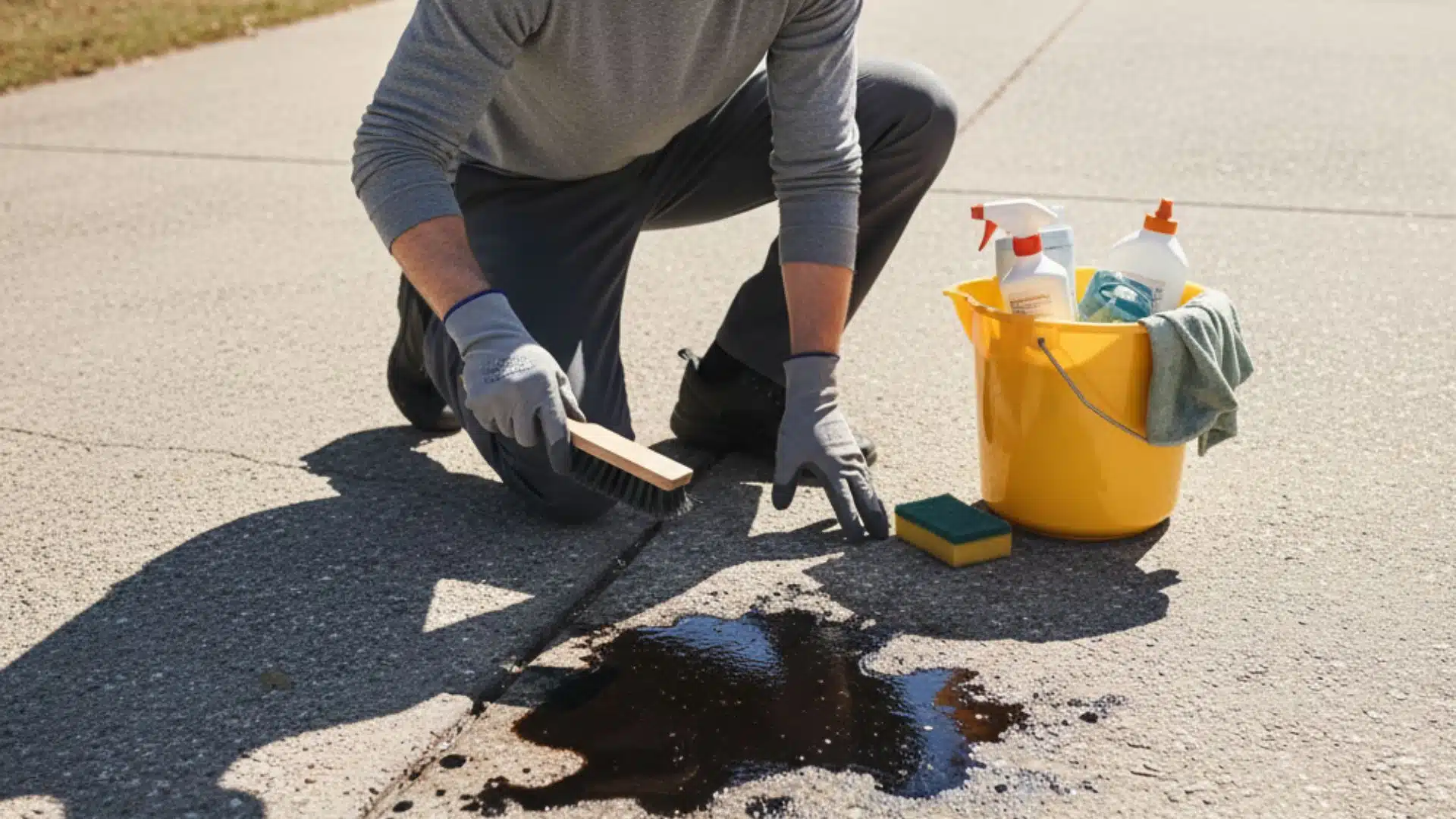
Ever notice those ugly dark spots on your driveway that just won’t go away? I’ve dealt with plenty of oil stains over the years, and they can turn beautiful concrete into an eyesore.
Learning how to get oil stains out of concrete isn’t rocket science, but it does require the right approach and timing.
Different methods work better depending on what caused the stain and how long it’s been there. Some techniques use common household items you already have, while others need special products from the store.
I’ve found that fresh spills are always easier to tackle than old ones that have been sitting around. Let me show you exactly how to restore your concrete and keep it looking great year after year.
Why Oil Stains on Concrete are So Stubborn
Concrete may appear solid, but it’s actually full of tiny pores that absorb liquids like a sponge. When oil hits your driveway or garage floor, it doesn’t just sit on top.
Instead, it seeps deep into these pores and spreads out underneath the surface.
Fresh oil stains are much easier to remove than old ones that have been left to sit. The longer oil stays in concrete, the deeper it penetrates and bonds with the material. Heat from the sun makes this process even faster.
Old stains become nearly permanent because the oil has had time to chemically react with the concrete. This is why acting fast when spills happen can save you hours of scrubbing later.
Step-by-Step Methods to Get Oil Stains Out of Concrete
Material You’ll Need
When it comes to removing oil stains from concrete, having the right materials makes the job much easier. I’ve listed the most useful items below so you know what to expect before starting:
| Material | Estimated Cost |
|---|---|
| Clay-based cat litter | $10 – $20 per 20 lb box |
| Baking soda | $0.90 – $3 per 1 lb box |
| White vinegar | $2.50 – $5 per gallon |
| Dish soap | $1.50 – $5 per bottle |
| Commercial concrete degreaser | $10 – $25 per quart |
| WD-40 spray | $5 – $8 per 11 oz |
| Oven cleaner | $3 – $7 per can |
| Coca-Cola | $1 – $2 per 12 oz can |
| Diatomaceous earth or sawdust | $5 – $20 per 5 lb bag |
| Acetone or paint thinner | $5 – $15 per quart |
| Stiff-bristle scrub brush | $5 – $15 per brush |
| Garden hose | $15 – $50 per 50 ft |
| Pressure washer | $80 – $200 for basic model |
| Protective gloves | $5 – $20 per box |
These are the main supplies you’ll need for different cleaning methods. Investing in a few of them ensures better results and less frustration.
NOTE: These costs are estimated and may vary based on your location, contractor rates, and specific project requirements.
I’ve tried various methods over the years to learn how to remove oil stains on concrete. Here are the most effective techniques I recommend:
1. Cat Litter (Clay-Based)

Clay-based cat litter works great because it soaks up oil naturally. This method works best on fresh spills that haven’t set in yet. Here’s how to use it properly:
- Step 1: Spread a thick layer of clay-based cat litter directly over the entire oil stain area.
- Step 2: Use your foot or a tool to crush the litter into the stain for better absorption.
- Step 3: Let the cat litter sit on the stain overnight to soak up maximum oil.
- Step 4: Sweep up all the used cat litter and dispose of it in the trash.
- Step 5: Rinse the area with clean water and scrub with a brush if needed.
Cat litter is cheap and works well for garage floors and driveways. You probably already have some at home, making this an easy first option.
2. Baking Soda and Vinegar Paste

This natural combination creates a fizzing action that helps break down oil stains. The paste stays on the stain longer than liquid cleaners for better results. Follow these simple steps:
- Step 1: Mix equal parts baking soda and white vinegar in a bowl to make a thick paste.
- Step 2: Spread the paste evenly over the oil stain with a spoon or spatula.
- Step 3: Let the paste sit on the stain for 30 to 60 minutes without disturbing it.
- Step 4: Scrub the area hard with a stiff brush using circular motions throughout the stain.
- Step 5: Rinse everything away with plenty of clean water until the area looks clear.
Both ingredients are safe and won’t harm plants or pets around your home. This method costs very little and uses common household items you likely have.
3. Dish Soap and Hot Water

Dish soap cuts through grease just like it does on your dirty dishes. Hot water helps the soap work better and loosens stubborn oil from concrete pores. Here’s the process:
- Step 1: Squirt a generous amount of strong dish soap directly onto the oil stain area.
- Step 2: Let the soap sit on the stain for about 10 minutes to start breaking down.
- Step 3: Scrub the soapy area hard with a stiff-bristle brush using back-and-forth motions.
- Step 4: Boil a large pot of water and carefully pour it over the scrubbed area.
- Step 5: Rinse with more hot water until all soap suds and loosened oil wash away.
This method works well because most people have dish soap and hot water available. It’s also safe to use around kids and pets without any safety concerns.
4. Commercial Concrete Degreaser

Store-bought degreasers are made specifically to break down tough petroleum-based stains on concrete. These products are stronger than household cleaners and work faster on old stains. Use them this way:
- Step 1: Read the product label carefully and wear gloves and eye protection for safety.
- Step 2: Apply the degreaser directly to the stain according to the bottle’s specific directions.
- Step 3: Let the product sit for the recommended time listed on the package instructions.
- Step 4: Scrub the treated area vigorously with a stiff brush to work the cleaner in.
- Step 5: Rinse thoroughly with plenty of water until no cleaner residue remains on the concrete.
These products cost more but often work better than homemade solutions on tough stains. Always follow safety instructions because some degreasers contain strong chemicals that need proper handling.
5. WD-40 Spray

WD-40 helps dissolve oil stains by breaking them down with similar petroleum-based ingredients. This method works best on lighter stains that haven’t penetrated too deeply into concrete. Try these steps:
- Step 1: Spray WD-40 generously over the entire oil stain until it’s completely covered with product.
- Step 2: Allow the WD-40 to soak into the stain for exactly 30 minutes without disturbing it.
- Step 3: Scrub the area firmly with a stiff brush to work the WD-40 deeper into.
- Step 4: Apply dish soap over the scrubbed area to cut through the WD-40 and loosen the oil.
- Step 5: Rinse everything away with plenty of water until the surface feels clean and soap-free.
WD-40 works on the principle that like dissolves like for oil-based stains. You’ll need dish soap afterward because WD-40 itself can leave an oily residue behind.
6. Oven Cleaner

Heavy-duty oven cleaner contains strong chemicals that break down grease and oil effectively. This method works well on stubborn stains that won’t come out with gentler cleaners. Here’s how to use it safely:
- Step 1: Wear gloves and eye protection before handling any oven cleaner for your safety.
- Step 2: Spray the oven cleaner generously over the entire oil stain until completely covered.
- Step 3: Let the cleaner sit on the stain for 10 to 15 minutes exactly.
- Step 4: Scrub the treated area hard with a stiff brush using firm back-and-forth motions.
- Step 5: Rinse thoroughly with plenty of water until no cleaner residue remains on the surface.
Always use oven cleaner in a well-ventilated area because the fumes can be strong. This method costs more than household remedies but works faster on tough old stains.
7. Poultice Method

A poultice draws oil out of concrete by combining an absorbent material with a solvent. This method works best on deep stains that have soaked far into the concrete. Follow this careful process:
- Step 1: Mix equal parts diatomaceous earth or sawdust with acetone or paint thinner into a thick paste.
- Step 2: Spread the paste mixture evenly over the stain, about half an inch thick everywhere.
- Step 3: Cover the paste with plastic wrap and tape the edges down to prevent drying.
- Step 4: Let the poultice sit for 24 hours so it can draw oil from deep inside.
- Step 5: Remove the plastic and scrape off the dried paste with a putty knife completely.
This method takes longer but works on the deepest stains that other methods can’t reach. Always work in a ventilated area because solvents have strong fumes that need fresh air.
8. Pressure Washing

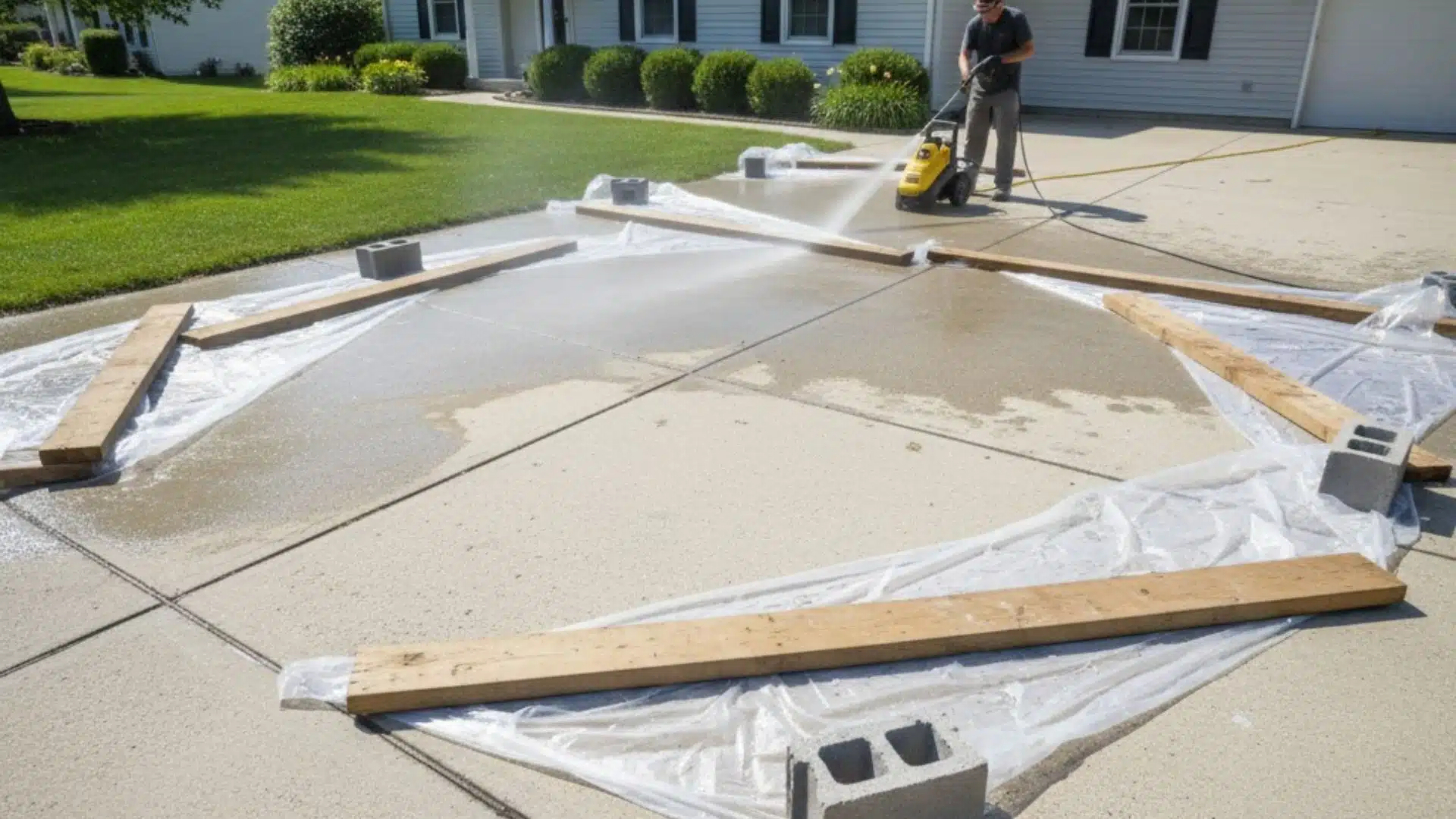
High-pressure water blasts oil and dirt right off concrete surfaces with pure force. This method works great on large areas like driveways, where hand scrubbing would take forever. Use it this way:
- Step 1: Rent or buy a pressure washer that can heat water to at least 200 degrees.
- Step 2: Fill the machine with hot water and add concrete cleaner if your model allows it.
- Step 3: Start spraying from the outside edges of the stain and work toward the center.
- Step 4: Hold the spray nozzle about 12 inches away from the concrete surface for best results.
- Step 5: Move the nozzle slowly back and forth until all visible oil washes away completely.
Pressure washing saves time and energy compared to scrubbing large stained areas by hand. You can rent these machines from most home improvement stores if you don’t own one.
9. Coca-Cola Trick

Cola contains citric acid that helps break down oil stains in a surprising way. This method works best on small, fresh stains before they set deeply into the concrete. Try these simple steps:
- Step 1: Pour a full can of regular Coca-Cola directly over the entire oil stain area.
- Step 2: Let the cola sit on the stain for several hours so the acid can work.
- Step 3: Check the stain every hour and add more cola if it starts drying out.
- Step 4: Scrub the area with a stiff brush after the cola has been sitting long enough.
- Step 5: Rinse away all the sticky cola residue with plenty of clean water until clear.
This method is fun to try and uses something most people have in their refrigerator. Don’t expect miracle results, but it can help lighten small stains when combined with scrubbing.
Indoor vs. Outdoor Oil Stain Removal: Key Differences
Learning how to clean oil from concrete requires different approaches depending on where the spill happened. Here’s how indoor garages and outdoor driveways compare:
| Aspect | Indoor Garages | Outdoor Driveways |
|---|---|---|
| Ventilation | Open doors, use fans for air circulation | Natural airflow sufficient |
| Water Use | Minimize water, mop up excess immediately | Use water freely, natural drainage |
| Chemical Safety | Avoid strong solvents; extra caution is needed | Can use stronger chemicals safely |
| Weather Impact | Clean anytime, no weather concerns | Check the forecast, avoid rain/freezing |
| Runoff | Contain all solutions within the garage | Direct away from drains/plants |
| Equipment | Limited space, may need extension cords | Easy access for large equipment |
| Cleanup | Sweep and mop thoroughly | Air dry naturally |
The main difference is that garages need better ventilation and water control, while driveways require weather planning and runoff management. Both locations can achieve excellent results with proper preparation and technique.
Preventing Future Oil Stains on Concrete
Stopping oil stains before they happen saves you hours of scrubbing and frustration later. Here are the best ways to protect your concrete surfaces:
- Apply concrete sealer to driveways and garage floors every two to three years for maximum protection.
- Place absorbent mats or drip pans under parked vehicles to catch leaks before they hit concrete.
- Check your vehicles regularly for oil leaks and fix small problems before they become big messes.
- Clean up any spills immediately with cat litter or paper towels to prevent permanent staining.
Prevention is always easier and cheaper than trying to remove old, set-in oil stains. These simple steps will keep your concrete looking clean and new for years.
Community Tips and Real-Life Advice

Cleaning oil stains from concrete doesn’t have to be a headache. Many homeowners share smart, simple tricks on forums that really work.
For example, a popular Reddit discussion highlights clever ideas like using cola to break down grease, spraying WD-40 to lift stains, or powdered laundry detergent for scrubbing tough spots.
Most hacks shine with fresh or light stains but struggle on older, deep ones. Absorbing oil with baking soda or cat litter before cleaning also helps soak up extra mess.
These community tips save time and money by showing real results from real people. Trying some of these could make your cleanup easier and more successful.
That’s a Wrap
Getting oil stains out of concrete takes patience, but the results make all your effort worthwhile. I hope these methods help you tackle even the toughest stains with confidence and success.
Remember that knowing how to get oil stains out of concrete properly saves you money on expensive professional cleaning services.
The key is choosing the right method for your specific situation and stain type. Prevention through regular sealing and quick cleanups keeps your concrete looking perfect for years to come.
Each technique has its own strengths, so don’t give up if the first one doesn’t work perfectly. Still struggling with a stubborn stain that won’t budge? Share your situation in the comments below, and let’s work it out together!