I’ve used acrylic paint on so many projects. On paper, canvas, or even on old pieces of wood. But the first time I left one outside, and it rained, the paint ran everywhere.
That made me stop and think. Is acrylic paint waterproof? I really wanted to know. It seemed like it should be. But I found out it’s only water-resistant when dry. That means it can still be damaged if it gets wet enough.
Now you’re here, and I know why.
You’ve painted something. Maybe it’s for a gift. And you want it to last.
In this blog, I’ll show you how acrylic paint reacts to water, and how you can keep your work safe. It’s easier than you think.
What You Should Know About Acrylic Paint
Acrylic paint is a favorite for many reasons. It dries quickly, sticks to different surfaces, and the colors stay bright. But it doesn’t work the same way as every other kind of paint.
Acrylic is made with a plastic-like material that forms a solid layer when it dries. Even then, it’s not fully protected from water, heat, or sunlight unless you take additional steps.
The way it behaves depends on where you use it and what you paint on. The surface matters. So does the air around it, and how you seal it when you’re done. These things all play a role in how long your project will last.
Painting something for inside your home is different from painting something for the outdoors. It’s important to know what to expect.
That way, you can plan ahead and keep your work looking good for a long time.
Is Acrylic Paint Waterproof?
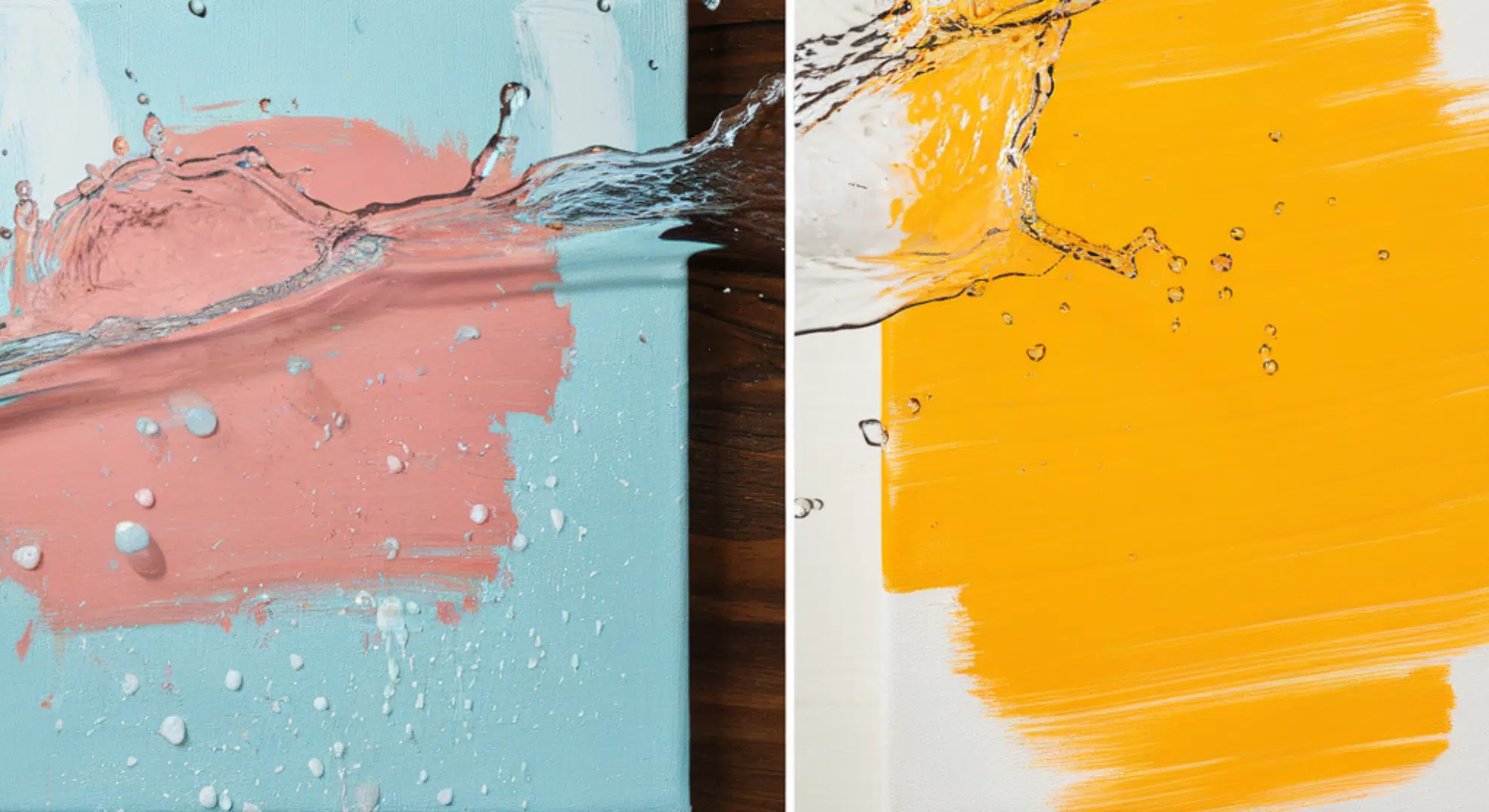
Acrylic paint is not waterproof. Once it dries, it becomes water-resistant, but that’s not the same thing. Water-resistant means it can stand up to a bit of water, like a few splashes or a quick wipe with a damp cloth.
But it will not survive soaking, heavy rain, or water left sitting on the surface.
Acrylic paint is made with water and plastic materials. When it dries, it forms a solid layer. This layer can slow down water, but it doesn’t fully block it.
Over time, unsealed acrylic paint can absorb moisture, especially if it’s on a porous surface like paper, wood, or fabric. That moisture can cause the paint to swell, peel, or fade.
Think of it this way: a painted rock might be fine if it sits on a dry windowsill. But place it outside in the rain, and you’ll start to see damage. A canvas might handle light cleaning, but spill a drink on it and leave it there? The paint may lift or smear.
Many people believe acrylic paint becomes waterproof once dry, but that’s not true. If you want full protection, especially for outdoor use, sealing it is a must.
What Happens When Acrylic Paint Dries?
It’s more than just waiting for it to stop feeling wet. Acrylic paint dries through evaporation. As the water in the paint slowly disappears into the air, the plastic parts in the paint start to come together.
This creates a soft film that sticks to the surface. That’s how the color stays in place.
But here’s what many people miss: drying and curing are not the same thing. Drying means the surface feels solid. Curing means the whole layer has fully hardened. That takes more time.
Key things to know:
- Dry to touch: around 15 to 30 minutes
- Fully cured: 1 to 3 weeks, depending on thickness and air temperature
- Water-resistant: only after drying, not waterproof without sealing
Once dry, acrylic paint becomes tougher. It’s smoother, the color may darken a bit, and it resists light splashes. But without curing and sealing, it’s still susceptible to water damage and wear.
Drying helps your project look good and last longer, but it’s only part of what keeps it strong. You’ll need to do more if it’s meant to stay safe from water.
Does Acrylic Paint Wash Off?
The answer depends on a few key things: the surface, how dry the paint is, and if it’s been sealed.
Acrylic paint can wash off when:
- It’s still wet or hasn’t cured yet
- It’s applied to a porous surface like paper or untreated wood
- It isn’t sealed with a clear topcoat or varnish
Acrylic paint usually won’t wash off when:
- It has dried and fully cured
- The surface was clean and prepped
- A proper sealant was applied
Even dry acrylic paint can weaken over time. Detergents, scrubbing, and heavy rain can slowly wear away the thin paint film. This can lead to peeling, fading, or lifting, especially on outdoor items.
How Waterproofing Acrylic Paint Works

Acrylic paint needs extra protection because its dry layer is only water-resistant, not waterproof. This means it can hold off a little moisture but still lets water through over time. To make it truly waterproof, you need to add a barrier on top.
That’s where sealants come in.
Sealants like varnish, polyurethane, or resin form a clear coat that blocks water. They harden into a solid shield over the paint, making it safe from rain, spills, and scrubbing. Each type offers different levels of shine and toughness.
Without a sealant, even cured paint can wear down from weather or rough use. Sealing your work is the key step if you want it to last and stay looking fresh.
Waterproof Performance on Different Surfaces
Acrylic paint reacts differently depending on what you paint on. Some surfaces soak it in; others make it hard for the paint to stick.
To make sure your work holds up against water, it helps to know how each surface behaves and what you can do to protect it.
Wood

Wood is very porous, which means it soaks up paint and moisture easily. Acrylic sticks well to wood, but it needs to be sealed to last. Use a wood primer before painting and finish with a clear acrylic sealer or polyurethane. This keeps out water and prevents peeling.
Fabric

Fabric soaks in paint deeply but bends and stretches. That makes it tricky. Acrylic can work if you mix it with fabric medium before painting. After drying and curing, heat-set it with an iron, then seal it with a fabric-safe spray.
Glass and Ceramic

These are smooth and non-porous, so paint doesn’t grip well. Use a glass primer to help with adhesion. Once dry and cured, seal with a clear gloss spray or bake the item (if it’s oven-safe) to set the paint.
Plastic

Plastic is slick and hard to stick to. Use a plastic primer first to help the paint stay on. Then use a clear acrylic sealer for protection. Without this prep, the paint will easily scratch or wash off.
Rocks

Rocks are porous but solid, making them great for painting. Clean them first, use outdoor acrylics if possible, and seal with a weatherproof spray. This keeps the colors strong and protects from rain and sun.
Paper and Cardboard

These are very porous and water-resistant. Acrylic paint can cause them to warp or tear. Use thin layers, let each layer dry fully, and avoid water-heavy painting. Seal with a matte spray fixative to prevent smudging or damage.
Is Acrylic Paint Waterproof Outdoors?
Acrylic paint can be used outdoors, but on its own, it’s not waterproof. Once dry and cured, it resists a bit of water, but outdoor conditions are much harsher.
Rain, UV rays, humidity, and temperature changes can break down the paint film over time. It may crack, fade, or peel, especially if left unsealed.
Outdoor acrylic is made to hold up better, but even that needs sealing. Projects like garden signs, flowerpots, rocks, and patio art should always be sealed with a weatherproof topcoat. This adds a strong barrier to block out moisture and sun.
When applied correctly, outdoor acrylic paint can last 2 to 5 years, depending on the surface, climate, and the quality of the materials used.
Still, some wear is normal over time. Reapplying sealant every couple of years can help keep the color bright and the surface strong.
Best Sealers to Protect Acrylic Paint from Water
To make your acrylic paint last and stand up to water, using a good sealer is a must. But not all sealers work the same way. Here’s a quick look at how the most common ones compare:
| Sealer Type | Pros | Cons | Best For | Finish Options |
|---|---|---|---|---|
| Acrylic Varnish | Easy to use, flexible, doesn’t yellow | Not the strongest for outdoor use | Canvas, indoor art, craft projects | Matte, Satin, Gloss |
| Polyurethane | Strong, long-lasting, great for wood | May yellow (oil-based), strong smell | Furniture, signs, wood surfaces | Gloss, Satin |
| Polycrylic | Clear, water-based, non-yellowing | Less durable for outdoor use | Indoor crafts, light-use wood items | Matte, Satin, Gloss |
| Epoxy Resin | Fully waterproof, thick, glossy coat | Harder to apply, longer drying | Outdoor pieces, coasters, and tabletops | High Gloss only |
Each of these sealers brings something different to the table. Pick the one that fits your project’s needs and where it will be used, indoors or outdoors.
How to Fix Acrylic Paint That Got Wet Too Soon
If your acrylic paint got wet before it had time to dry or cure, don’t panic. You may still be able to repair the damage and protect the project. Start by checking the extent of the issue:
- Softened paint: Feel the surface to see if it’s tacky or rubbery.
- Peeling or lifting edges: Look closely at corners or raised areas.
- Let it dry fully: Stop working and let the surface dry without touching it.
- Sand damaged spots: Use fine sandpaper to smooth out bubbles or flakes.
- Clean gently: Wipe away dust with a barely damp cloth.
- Repaint as needed: Apply thin, even coats and let each one dry completely.
- Seal carefully: Once the paint is fully dry and cured, use a waterproof sealer.
Taking your time with each step helps prevent more damage. If the paint wasn’t too badly affected, sealing at the end can still save the work and make it last longer.
Conclusion
I used to assume my work was safe once the paint felt dry. But I found out the hard way that acrylic paint’s waterproofness isn’t a simple yes.
It’s not. It’s water-resistant at best unless you seal it right. Once I started sealing and giving each piece time to cure fully, my projects held up so much better.
Now it’s your turn to think ahead. If your piece will face water, sun, or wear, sealing isn’t optional; it’s necessary. Let the paint cure, pick the right sealer, and give it time. That’s how you keep your work safe and strong.
Want more tips that actually make painting easier? Check out the other blogs and keep learning clever, simple ways to protect your work!